

Every snow season, many beginners ask:
“I already have sunglasses—do I really need ski goggles?”
At first glance, both seem to offer sun protection and wind blocking.
But in reality, ski goggles and sunglasses are built for completely different environments. Wearing regular sunglasses on the slopes doesn’t just affect your performance—it may put your safety at risk.
This article breaks down the real differences between ski goggles and sunglasses from the perspectives of protection, visibility, structure, materials, safety, and usage scenarios.
❄️ 1. Protection Level: Ski Goggles Are “Professional Gear,” Sunglasses Are Not
👓 1. UV Protection Under Extreme Conditions
High-quality sunglasses do offer UV400 protection, but snowy mountains amplify UV exposure dramatically:
UV increases with altitude
Snow reflects up to 80% of UV rays
Exposure is 2–3× stronger than daily environments
Advantages of ski goggles:
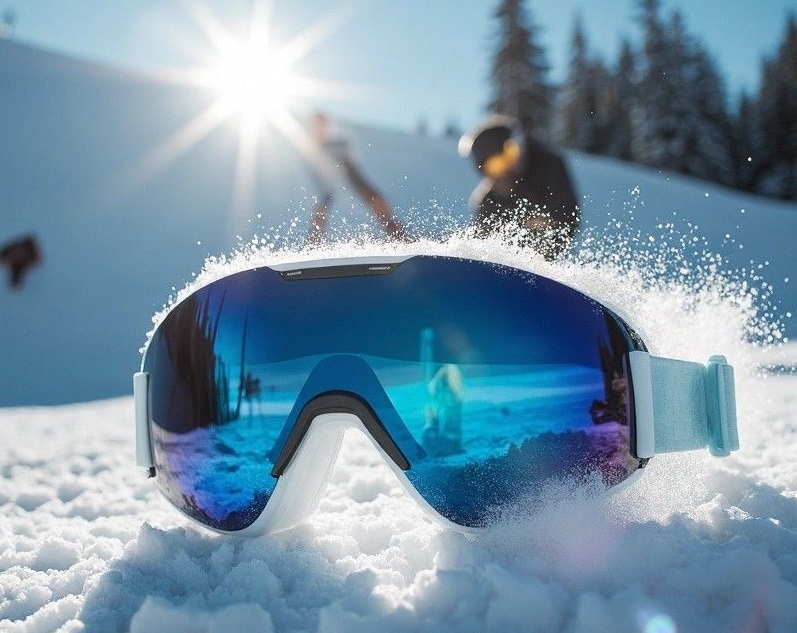
Larger coverage fully shields the eyes
Prevent UV from entering through the sides or bottom
Designed specifically for high-reflection snow conditions
Problems with sunglasses:
Small lenses leave exposure gaps
Light easily leaks in from the sides
Insufficient protection in harsh mountain UV levels
🌫️ 2. Visibility: Ski Goggles Are Optimized for Snow, Sunglasses Are Not
1. Ski Goggles Adapt to Changing Weather
Goggle lenses come in different VLT (Visible Light Transmission) ranges:
Low VLT → For bright, sunny days
Medium VLT → For mixed or cloudy weather
High VLT → For fog, heavy clouds, or night skiing
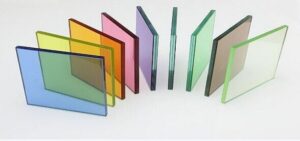
Many goggles use amber, rose, or yellow lenses to enhance contrast—important for spotting bumps, dips, and terrain texture.
2. Sunglasses Are Designed for Everyday Sunlight
They mainly:
Block sunlight
Reduce glare
Improve basic comfort
But they don’t enhance contrast, and they fail in fog or low-light environments.
🔥 3. Anti-Fog Performance: A Clear Winner
Fogging is one of the biggest issues in winter sports.
Ski goggles prevent fog buildup using:
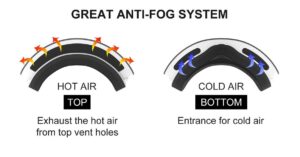
Double-layer lenses that stabilize temperature
Internal anti-fog coatings
Large ventilation channels
Helmet compatibility to improve airflow
Sunglasses have none of these features, making them quick to fog up when warm breath rises into cold air. In minutes, vision becomes completely blurred.
⛷ 4. Impact Resistance & Safety: Ski Goggles Are Built for Protection
Skiing involves:
High speeds
Unexpected falls
Ice, wind, and flying snow
Tree branches or debris
Ski goggles generally use polycarbonate lenses, which are:
200× stronger than normal plastic
Highly impact-resistant
Shatterproof (won’t injure your eyes)
Sunglasses typically use everyday resin or plastic lenses, which may crack or shatter in a fall—dangerous on the slopes.
🧊 5. Structural Design: Built for Different Purposes
Ski Goggle Features
Large lens for wide peripheral vision
Soft foam for face sealing and comfort
Anti-slip elastic strap compatible with helmets
Windproof, snowproof, and dustproof sealing design
Sunglasses Features
Lightweight
Fashion-oriented
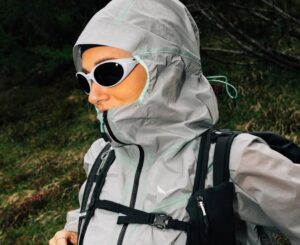
Minimal side protection
Gaps that allow wind and snow to enter
The design purposes are fundamentally different—one for performance and safety, the other for daily comfort.
🌈 6. Comfort & Stability: Ski Goggles Stay in Place
During skiing—jumping, turning, riding at high speed—sunglasses tend to:
Slip
Bounce
Lift upward due to wind
Fall off during a crash
Goggles provide a snug, stable fit that stays secure through all movements.
🏁 7. Usage Scenarios: Completely Different Needs
Ski Goggles Are Designed For:
High-altitude environments
Intense sunlight and snow reflection
Cold and windy conditions
High-speed motion
Fog, cloudy days, or night skiing
Sunglasses Are Designed For:
Everyday wear
Driving
Walking
Light outdoor activities
Using sunglasses on the slopes is like wearing casual shoes in a mountain race—you can, but it’s far from ideal.
🏁 Final Verdict: Ski Goggles and Sunglasses Are Not Interchangeable
Ski goggles offer:
Full UV protection
Optimized visibility in varying weather
Anti-fog technology
Impact resistance and safety
Wide coverage and sealing
Helmet compatibility
Sunglasses simply cannot match these performance and safety standards.
On the slopes, ski goggles are essential—not optional.