




The Engineering Logic Behind Airflow
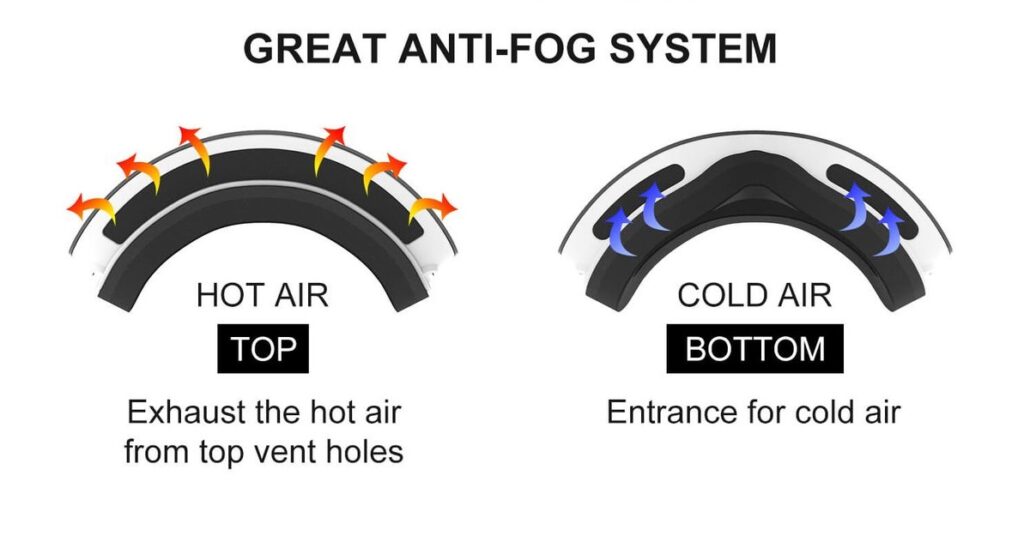
A ski goggle’s ventilation system is not just a few holes on the frame — it’s a carefully engineered airflow pathway designed to reduce fog, balance temperature, and keep your vision clear in extreme environments. Below is a simplified, icon-supported explanation.
🔧 1. Frame Ventilation
How it works
🕳️ Top & bottom vents guide cold air in and push warm air out
♻️ Continuous airflow prevents moisture from settling
Engineering logic
Uses pressure difference created while skiing
Warmer air naturally rises → top vents release it efficiently
🧵 2. Foam Layer Air Channels
How it works
🫧 Multi-layer breathable foam allows controlled airflow
🚫 Blocks snow & dust while letting air pass through
Engineering logic
Balances air permeability and insulation
Prevents sudden cold air blasts that cause lens fogging
3. Double-Lens Insulation
How it works
🧊 Creates an insulating air barrier between the lenses
🔥 Reduces temperature difference between inside & outside
Engineering logic
Limits condensation by keeping internal temperature stable
Similar principle to thermal windows
💨 4. Anti-Fog Coating Support
How it works
💧 Hydrophilic coating spreads moisture into a thin invisible layer
🌫️ Works together with airflow to keep vision clear
Engineering logic
Coating reduces the amount of moisture vapour accumulating on the lens
Airflow then removes it through the vent system
🏂 5. Helmet-Compatible Vent Design
How it works
🔗 Vents align with helmet openings to optimize airflow
📈 Prevents “air blockage” caused by mismatched gear
Engineering logic
Creates a combined ventilation channel
Ensures smoother, stronger airflow while skiing
Why Ventilation Matters
❄️ Reduces fogging dramatically
🌬️ Maintains stable internal temperature
👁️ Ensures clear vision in changing weather
🏂 Supports performance & safety on slopes